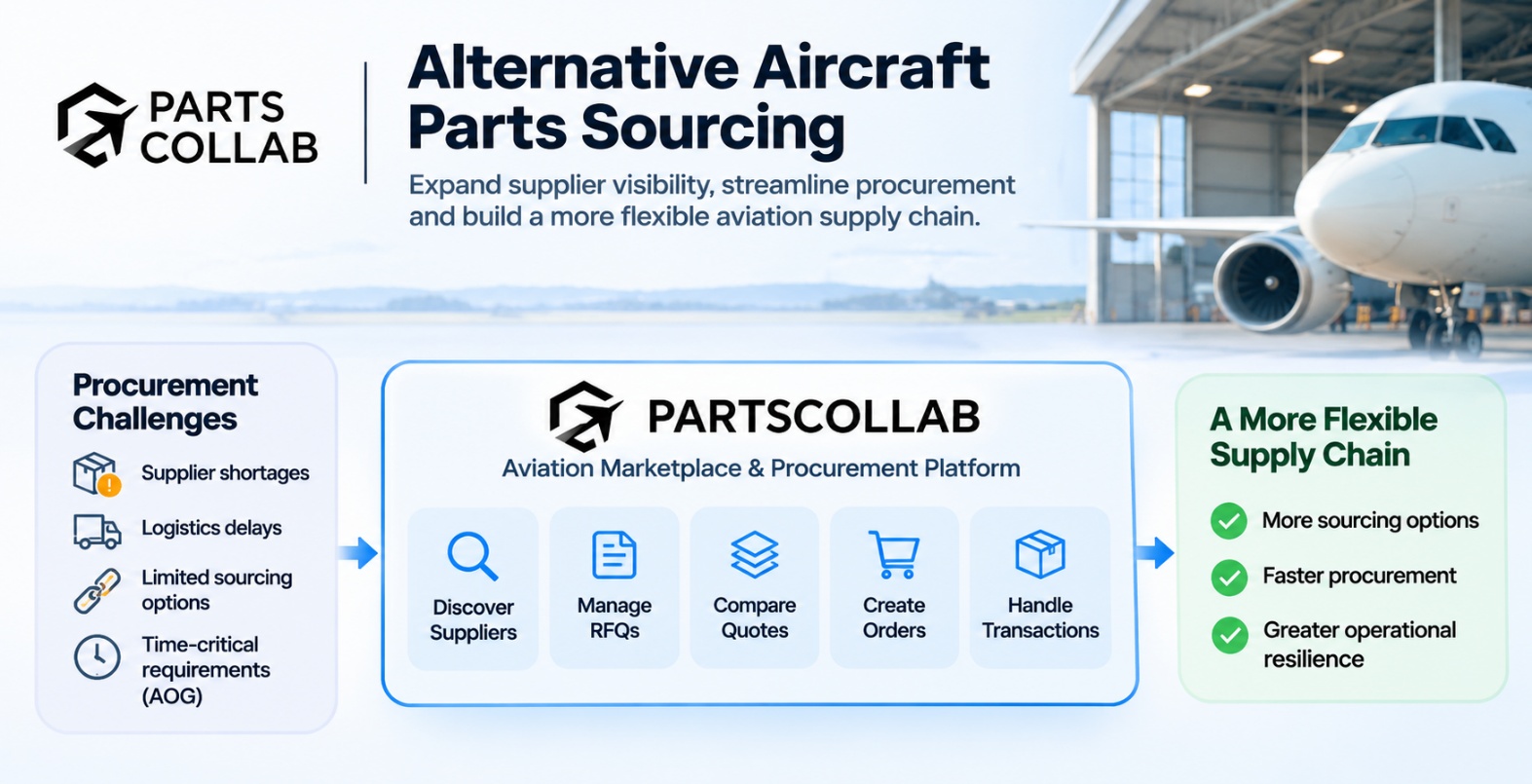
Aircraft parts availability plays a critical role in maintaining aircraft operations and meeting maintenance schedules. However, supplier shortages, logistics delays and unexpected disruptions can make sourcing increasingly challenging.
For airlines, Maintenance, Repair and Overhaul (MRO) providers, and aircraft parts suppliers, relying on a limited supplier network or a single sourcing channel can restrict procurement flexibility.
Alternative aircraft parts sourcing helps aviation organizations expand supplier visibility, identify additional purchasing opportunities and maintain more flexible procurement processes.
What Is Alternative Aircraft Parts Sourcing?
Alternative aircraft parts sourcing is the process of identifying and evaluating additional suppliers or sourcing channels when established sources cannot meet availability, delivery or commercial requirements.
It may involve searching broader supplier inventories, contacting additional distributors, requesting quotations and evaluating suitable sourcing options.
The objective is not simply to find more suppliers, but to improve procurement flexibility while maintaining appropriate quality, traceability and commercial controls.
Why Is Supplier Diversification Important in Aviation?
Aviation supply chains depend on interconnected supplier networks, transportation systems and communication channels. Disruptions at any stage can affect maintenance schedules, purchasing decisions and aircraft availability. Recent technology and flight disruptions show why aviation supply chain resilience depends on having more than one way to source.
Maintaining access to multiple sourcing channels can help procurement teams:
- Expand supplier visibility: Discover potential sources beyond existing supplier relationships.
- Improve sourcing flexibility: Identify additional options for difficult-to-source or time-critical components.
- Support AOG procurement: Explore potential suppliers for urgent Aircraft on Ground requirements.
- Compare commercial offers: Evaluate pricing, availability, lead times and supporting documentation.
- Reduce sourcing dependencies: Avoid relying entirely on one supplier network or procurement channel.
Supplier diversification should complement established supplier qualification and purchasing procedures rather than replace them.
Five Practical Steps to Improve Aircraft Parts Sourcing
1. Search Across Multiple Supplier Networks
A broader search can reveal potential sources that may not be visible through an organization's existing supplier database.
Using accurate part numbers and, where applicable, approved alternative part numbers can improve sourcing efficiency.
Any proposed substitution must be assessed for technical eligibility before procurement or installation.
2. Establish Direct Supplier Communication
Access to supplier contact information helps procurement teams clarify availability, request documentation and coordinate urgent requirements.
Maintaining direct communication options can be particularly useful when normal procurement workflows are delayed or interrupted.
3. Compare More Than Price
The lowest quotation is not always the most suitable option.
A practical aircraft parts quotation comparison should consider:
- Part number, condition and quantity
- Availability and delivery lead time
- Certification and traceability documentation
- Warranty and commercial terms
- Supplier location and logistics requirements
- Core return conditions, where applicable
Evaluating these factors supports more informed purchasing decisions.
4. Maintain Supplier Qualification and Traceability
Alternative sourcing must not compromise aviation quality requirements.
Procurement teams should follow their organization's supplier approval procedures and verify the documentation appropriate to each component and transaction.
Depending on the part and applicable requirements, supporting documentation may include an FAA Form 8130-3, EASA Form 1, Certificate of Conformity or other acceptable records.
A searchable listing or supplier quotation does not, by itself, establish that a part is eligible for installation.
5. Keep Procurement Transactions Organized
When sourcing activities involve multiple suppliers, disconnected emails and spreadsheets can make quotation comparison and transaction follow-up more difficult.
Structured RFQs, quotations, purchase orders and supporting records help teams maintain visibility and traceability throughout the procurement process.
Practical Example: Sourcing an Urgent Aircraft Component
Consider an airline maintenance team searching for a component that its regular supplier cannot deliver within the required timeframe.
The procurement team can expand its search to additional supplier networks, identify potential sources and contact suppliers directly to confirm availability.
Once quotations are received, the team can compare lead times, commercial terms, component condition and documentation before proceeding through established purchasing and approval procedures.
This approach provides additional sourcing options without bypassing essential technical and quality controls.
How PartsCollab Connects Aircraft Parts Sourcing and Procurement Management
PartsCollab is an AI-powered B2B aviation marketplace and procurement collaboration platform designed to connect buyers, suppliers, inventory information and commercial transaction workflows.
With more than 3.47 million searchable aircraft parts listings across registered organizations and an extended supplier data network, PartsCollab helps aviation professionals discover sourcing opportunities and connect with potential suppliers.
Beyond marketplace searches, the platform supports:
- Aircraft parts and supplier discovery
- Access to available supplier contact information
- RFQ creation and management
- Quotation comparison and evaluation
- Purchase orders and sales orders
- Commercial documentation and transaction coordination
By bringing supplier discovery and procurement workflows into a connected digital environment, PartsCollab helps buyers and sellers coordinate their activities more efficiently.
PartsCollab continues to evolve, with a focus on expanding supply chain management capabilities and creating a more integrated digital environment for aviation businesses.
The platform can be adopted alongside existing enterprise systems while supporting organizations seeking more connected procurement and supply chain workflows.
Frequently Asked Questions
How can airlines find alternative aircraft parts suppliers?
Airlines can identify additional suppliers through specialized aviation marketplaces, established industry networks, manufacturer channels and qualified distributors. Potential suppliers should be evaluated for availability, reliability, documentation and compliance with applicable procurement requirements.
How can alternative sourcing support AOG procurement?
Alternative sourcing can help AOG teams identify additional potential suppliers, obtain quotations and compare delivery options when established sources cannot meet urgent requirements. Actual delivery and aircraft return-to-service times depend on part availability, logistics and applicable technical approvals.
What is the difference between an aviation marketplace and a procurement management platform?
An aviation marketplace connects buyers and suppliers, helping businesses discover products, identify sourcing opportunities and establish commercial relationships.
A procurement management platform supports purchasing activities such as RFQs, quotation evaluation, purchase orders and transaction documentation.
Combining marketplace connectivity with procurement workflows helps aviation organizations manage supplier discovery and purchasing activities within a more connected environment.
Conclusion: Better Sourcing Starts with Better Connectivity
Alternative aircraft parts sourcing is an important element of aviation supply chain resilience.
By maintaining access to broader supplier networks, direct communication options and structured purchasing workflows, aviation organizations can improve their ability to respond to shortages and unexpected procurement challenges.
Effective sourcing is not only about finding a part. It is about identifying suitable suppliers, evaluating available options and managing transactions efficiently.
Discover how PartsCollab connects aviation buyers and suppliers through an AI-powered marketplace and procurement collaboration platform, or book a demo with our team.
Further Reading
- FAA — Detecting and Reporting Suspected Unapproved Parts, Advisory Circular 21-29D
- FAA — Aircraft Certification and Continued Operational Safety
Editorial disclaimer: This article is provided for general industry information and does not constitute regulatory, technical or airworthiness advice. References to third-party organizations, standards and documentation are informational and do not imply affiliation or endorsement. Aircraft parts procurement and installation remain subject to applicable regulations and organizational approval procedures.

