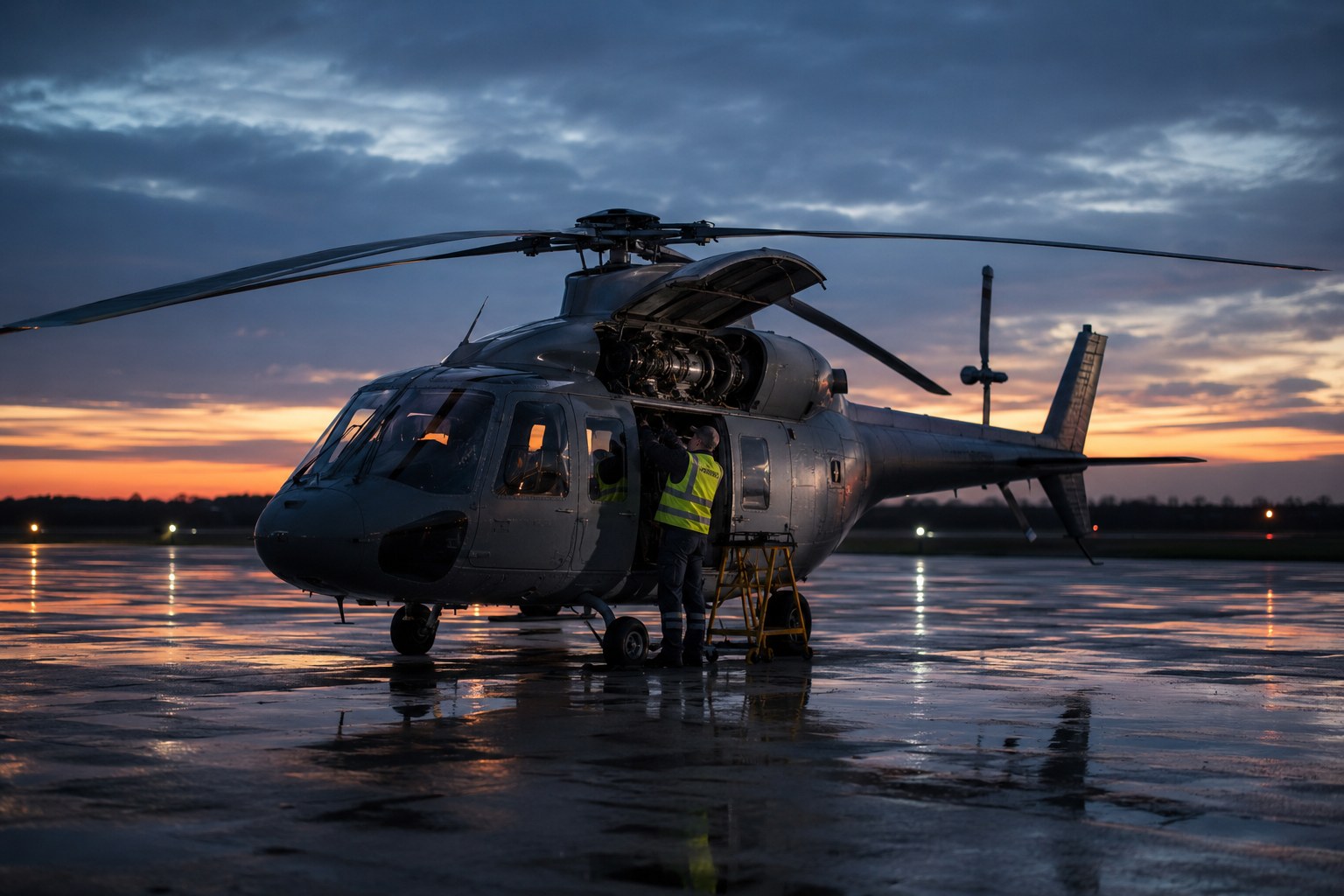
Few events are more disruptive to an airline, helicopter operator, or MRO organization than an Aircraft on Ground (AOG) situation.
When an aircraft becomes unavailable due to an unexpected technical issue, missing component, maintenance requirement, or supply chain delay, every minute matters. Operations teams, procurement professionals, logistics providers, and maintenance personnel immediately shift into crisis-response mode to return the aircraft to service as quickly as possible. But how much does an AOG actually cost? Industry estimates suggest that AOG events can cost operators anywhere from USD 10,000 to USD 150,000 per hour, depending on aircraft type, route, passenger impact, mission criticality, and operational circumstances. For aviation organizations, understanding the true cost of an AOG event is the first step toward reducing downtime and improving operational readiness.
What Is an AOG Event?
Aircraft on Ground (AOG) is an aviation term used when an aircraft is unable to fly due to technical, maintenance, engineering, operational, or supply chain-related issues.
Common causes include:
- Component failures
- Engine defects
- Avionics malfunctions
- Missing or unavailable spare parts
- Delayed maintenance activities
- Certification or compliance issues
- Supply chain disruptions
- Tooling or resource shortages
Because aircraft generate value only when operational, every hour on the ground directly affects financial and operational performance.
Breaking Down the Cost of an AOG Event
The visible repair cost is often only a small portion of the total financial impact.
1. Lost Revenue
A grounded aircraft cannot generate revenue.
Depending on aircraft type and route profitability, operators may lose between USD 10,000 and USD 150,000 per hour in direct revenue and operational value. Widebody aircraft operating international routes typically incur significantly higher losses than narrowbody aircraft operating shorter sectors.
2. Passenger Disruption Costs
Flight delays and cancellations create additional expenses, including:
- Passenger compensation
- Hotel accommodations
- Meal vouchers
- Ground transportation
- Rebooking on alternative flights
For heavily booked flights, passenger-related costs can quickly reach tens of thousands of dollars.
3. Expedited Logistics and Parts Procurement
AOG situations often require emergency sourcing and transportation.
Organizations may need to:
- Locate hard-to-find components
- Charter dedicated transportation
- Arrange same-day international shipments
- Expedite customs clearance
- Mobilize technical personnel
These emergency logistics activities significantly increase procurement and transportation costs.
4. Maintenance and Labor Costs
Emergency troubleshooting, inspections, repairs, and overtime labor all contribute to the overall AOG cost.
Specialized technicians, engineers, and maintenance teams frequently work extended shifts to minimize downtime and return the aircraft to service as quickly as possible.
5. Schedule Disruption Across the Network
The impact of a single AOG event often extends far beyond one aircraft.
A grounded aircraft can create:
- Delayed downstream flights
- Crew scheduling disruptions
- Missed passenger connections
- Reduced fleet utilization
- Airport slot complications
The resulting operational ripple effect may impact hundreds of passengers and multiple flight sectors.
Why Supply Chain Speed Matters During AOG Events
In many cases, the longest delay is not the repair itself, it is finding the required part.
Procurement teams frequently spend valuable hours:
- Searching multiple suppliers
- Sending RFQs
- Comparing quotations
- Verifying certifications
- Confirming inventory availability
- Coordinating logistics
Every additional hour spent locating a component increases the total cost of the AOG event. When downtime costs can exceed tens of thousands of dollars per hour, procurement efficiency becomes a critical operational capability rather than an administrative function.
AOG Impact on Helicopter Operators
While AOG events are often associated with commercial airlines, the consequences can be equally significant for helicopter operators.
Helicopter fleets frequently support critical operations such as:
- Offshore energy transportation
- Emergency medical services (EMS)
- Search and rescue missions
- Defense and government operations
- Law enforcement activities
- Infrastructure and utility projects
When a helicopter becomes unavailable due to a missing component or maintenance issue, the impact extends beyond direct revenue loss. Project delays, missed contractual obligations, reduced fleet availability, and lower mission readiness can have substantial operational and financial consequences. For many helicopter operators, aircraft availability and dispatch reliability are key performance indicators. Every hour of downtime can influence customer satisfaction, operational performance, and contract success. This makes rapid parts sourcing, inventory visibility, and supplier responsiveness essential elements of helicopter fleet management.
Reducing AOG Costs Through Better Visibility
The fastest AOG response begins long before an aircraft is grounded.
Organizations that maintain:
- Accurate inventory data
- Reliable supplier networks
- Centralized certification records
- Structured procurement workflows
- Real-time visibility into available inventory
can often reduce response times dramatically. This is why airlines, helicopter operators, MROs, suppliers, and distributors increasingly invest in digital aviation procurement and collaboration platforms.
The Cost of Prevention Is Often Less Than the Cost of Downtime
Organizations frequently focus on the direct cost of procurement systems while underestimating the cost of operational delays.
When industry estimates place AOG costs between USD 10,000 and USD 150,000 per hour, the annual investment required for modern procurement and collaboration tools may represent only a fraction of the cost of a single AOG event. In fact, the annual subscription cost of many aviation procurement platforms may be equivalent to only a few minutes of aircraft downtime. Avoiding just one prolonged AOG situation can often justify the investment in improved inventory visibility, supplier collaboration, and procurement efficiency. For aviation organizations, the question is often not whether they can afford to improve operational readiness, but whether they can afford not to.
How PartsCollab Helps Reduce AOG Response Time
PartsCollab was designed to help aviation organizations improve procurement speed, supply chain collaboration, and operational readiness during critical AOG situations.
Through a single aviation-focused workspace, organizations can:
- Prioritize and highlight AOG requirements across the platform, ensuring urgent requests receive immediate attention
- Search inventory and capabilities across participating airlines, helicopter operators, MROs, suppliers, distributors, and OEM representatives
- Compare quotations efficiently and accelerate supplier selection
- Centralize communication, RFQs, quotations, and transaction history in one location
- Manage FAA 8130-3, EASA Form 1, and other compliance documentation
- Identify and resolve discrepancies before parts leave the source location, reducing delays, returns, and shipment-related issues
- Verify certifications, conditions, serial numbers, shelf-life, and calibration status before shipment
- Track procurement activities and order status in real time
- Improve visibility across the entire aviation supply chain
By helping organizations locate inventory faster, coordinate suppliers more effectively, and resolve potential issues before shipment, PartsCollab reduces unnecessary delays throughout the procurement process. The result is faster decision-making, improved inventory visibility, reduced procurement cycle times, and shorter AOG recovery periods, helping aircraft return to service as quickly as possible. Unlike traditional procurement processes where information is spread across emails, spreadsheets, and multiple systems, PartsCollab brings inventory visibility, supplier collaboration, compliance management, and procurement workflows into a single aviation-focused platform. When AOG costs can reach tens of thousands of dollars per hour, reducing response times by even a small margin can deliver significant operational and financial benefits.
Final Thoughts
An Aircraft on Ground event is one of the most expensive operational disruptions in aviation.
While the exact cost varies by aircraft type, route, mission, and operational circumstances, industry estimates consistently place AOG costs between USD 10,000 and USD 150,000 per hour. For procurement and supply chain teams, every minute spent searching for inventory, managing RFQs, verifying certifications, or coordinating suppliers can directly impact the total cost of the event. Improving visibility, collaboration, and procurement efficiency is no longer simply a competitive advantage, it is a critical component of operational readiness.
Frequently Asked Questions
What does AOG mean in aviation?
AOG stands for Aircraft on Ground. It describes a situation where an aircraft is unable to fly due to maintenance, technical, operational, or supply chain-related issues.
How much does an aircraft AOG cost per hour?
Industry estimates suggest that AOG events can cost between USD 10,000 and USD 150,000 per hour, depending on aircraft type, route profitability, mission criticality, and operational impact.
What causes an AOG event?
Common causes include component failures, engine defects, avionics issues, maintenance delays, unavailable spare parts, supply chain disruptions, tooling shortages, and compliance-related findings.
How can airlines and helicopter operators reduce AOG downtime?
Organizations can reduce AOG downtime through proactive maintenance, accurate inventory management, strong supplier relationships, digital procurement workflows, centralized certification management, and improved visibility across their supply chain.
References
- International Air Transport Association (IATA) - Maintenance Cost Task Force Reports and Operational Best Practices
- Boeing - Commercial Market Outlook and Airline Economics Publications
- Airbus - Fleet Performance and Services Publications
- Aviation Week Network - AOG and Aviation Supply Chain Industry Analysis
- Oliver Wyman - Aviation Maintenance and Fleet Performance Studies
- ResearchGate - Managing Operational Efficiency and Reducing Aircraft Downtime by Optimization of Aircraft On-Ground (AOG) Processes for Air Operators
- Airlines for America (A4A) - Airline Operational and Economic Performance Reports

