When aviation professionals discuss procurement inefficiencies, the conversation usually focuses on inventory shortages, long lead times, supplier performance, or aircraft-on-ground (AOG) situations.
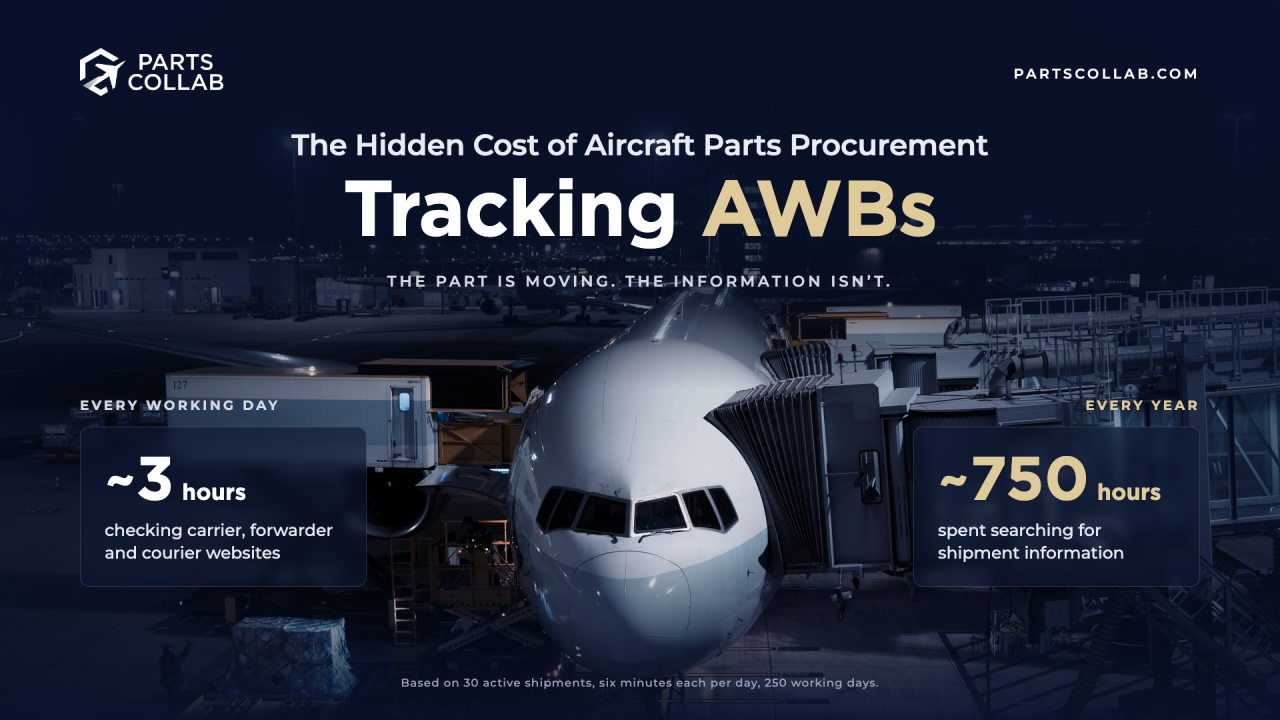
Yet one of the most common daily frustrations remains largely invisible and unmeasured: tracking aircraft parts shipments across multiple websites. Every day, procurement teams, logistics coordinators, and supply chain professionals spend valuable time searching for shipment updates, checking air waybill (AWB) status, chasing suppliers, and providing status updates to internal stakeholders. The aircraft part is moving. The information often is not.
A Typical Aviation Procurement Scenario
Consider a procurement specialist managing 30 active aircraft parts shipments.
For each shipment, they may need to:
- Obtain the AWB or tracking number from the supplier
- Access airline cargo websites
- Check freight forwarder portals
- Review courier websites
- Contact suppliers or check tracking websites for updates
- Inform maintenance and operations teams
- Update internal procurement records
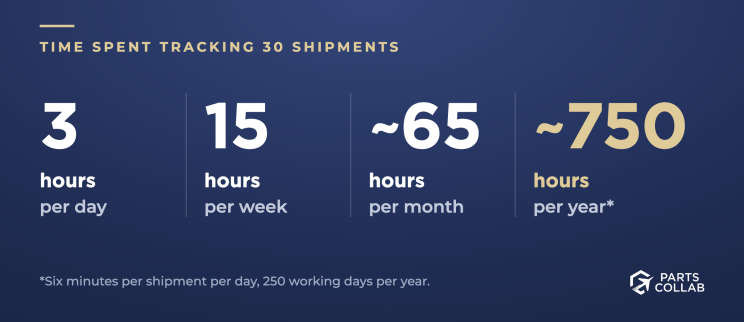
Even under a conservative assumption of only six minutes per shipment per working day, the workload adds up quickly:
- 3 hours per day
- 15 hours per week
- ~65 hours per month
- ~750 hours per year*
*Based on 30 shipments, six minutes per shipment per day, and 250 working days per year.
 This estimate excludes customs issues, shipment exceptions, delayed flights, missing documentation, AOG escalations, and the additional coordination these events create.
The Real Problem Is Fragmentation
Aircraft parts move through a connected logistics network. Information often does not.
Shipment visibility is commonly fragmented across:
- Airline cargo portals
- Freight forwarder systems
- Courier websites
- Email chains and messaging applications
- Internal spreadsheets and ERP systems
As shipment volumes increase, the administrative burden grows with them. Procurement professionals end up spending time searching for information instead of managing exceptions, evaluating risks, and making decisions.
When Shipment Tracking Becomes an Operational Risk
The impact extends beyond lost productivity. Limited shipment visibility can contribute to:
- Delayed maintenance planning
- Late identification of shipment disruptions
- Increased AOG exposure
- Excessive follow-up emails and telephone calls
- Reduced supplier accountability
- Poor coordination between procurement, logistics, and maintenance teams
In many cases, the biggest challenge is not moving the part. It is coordinating the information surrounding the part.
The Bigger Opportunity: Connecting Procurement and Logistics
The aviation industry has invested heavily in systems that manage procurement, inventory, maintenance, and finance. However, much of the day-to-day coordination still takes place through disconnected tools and manual follow-up.
Teams frequently switch between emails, spreadsheets, messaging applications, supplier portals, cargo websites, and internal systems simply to understand the status of one transaction. As organizations seek to improve efficiency without increasing headcount, reducing this administrative workload becomes a significant opportunity.
How PartsCollab Helps
PartsCollab connects aviation procurement activity with shipment visibility in one aviation-focused workspace. Organizations can:
- Broadcast RFQs to multiple suppliers
- Centralize supplier communication
- Compare quotations efficiently
- Manage procurement documents and transaction records
- Track courier shipments and AWBs without repeatedly visiting separate carrier websites
- Receive alerts when shipment status changes or when no movement is detected
- Monitor order and shipment progress
By connecting shipment information to the relevant procurement activity, teams can spend less time searching through websites, spreadsheets, and email chains and more time managing exceptions before they affect operations. PartsCollab cannot prevent a carrier from losing or misrouting a shipment. It can help ensure the problem does not go unnoticed, allowing teams to investigate earlier, protect maintenance plans, and begin contingency action before a delay becomes an AOG issue.
Final Thoughts
The next major efficiency gain in aviation procurement may not come only from finding more suppliers or accessing more inventory.
It may come from eliminating the hundreds of hours teams spend searching for shipment information that should already be visible. The aircraft part may already be moving. Procurement teams should not have to chase the information moving with it.
 Simplify aviation procurement and shipment visibility at PartsCollab.com

